



Brazilian Bikini Manufacturer
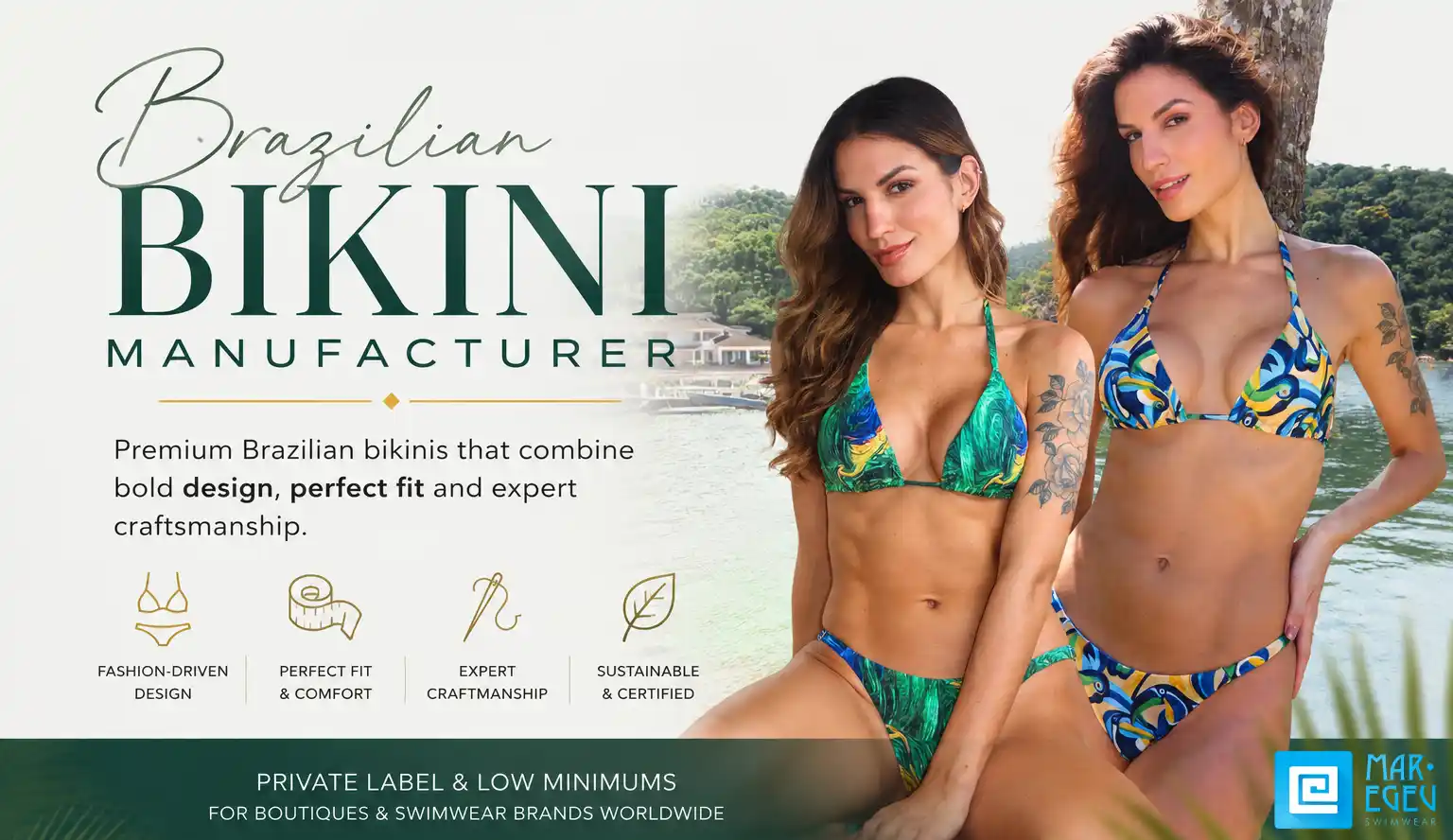
Table of contents
- Brazilian Bikini Manufacturer
- Why Is a Brazilian Bikini Manufacturer Globally Desirable?
- What Makes Brazilian Bikini Cuts Different?
- Why Brazilian Swimwear Fabrics Perform Differently
- Polyamide vs Polyester in Premium Swimwear
- Compression, Elasticity & Shape Retention
- Double-Lined Construction & Finishing
- Why This Matters for Swimwear Brands
- Common Problems With Low-Quality Swimwear Fabrics
- Premium Brazilian Swimwear Fabric
- Why Cheap Swimwear Loses Shape Quickly
- Common Mistakes New Swimwear Brands Make
- Why Many Global Brands Choose Brazilian Swimwear Manufacturing

Why Is a Brazilian Bikini Manufacturer Globally Desirable?
Brazilian bikinis became globally recognized for their distinctive fit, bold aesthetic, and close connection to Brazil’s beach culture.
Over time, Brazilian bikinis evolved from regional beachwear into a globally recognized swimwear category associated with contour-focused fits, bold styling, and resort fashion.
Today, Brazilian bikini manufacturers are known for combining fashion-driven design with technical expertise in swimwear.
Brazil’s year-round beach lifestyle also plays an important role in shaping local swimwear trends.
Because swimwear is deeply integrated into Brazilian fashion culture, manufacturers often develop collections that closely follow evolving consumer preferences.
In addition to aesthetics, many Brazilian swimwear factories specialize in top-tier production techniques and lower-volume private label manufacturing, making Brazil especially attractive for boutique and fashion-focused swimwear brands.






What Makes Brazilian Bikini Cuts Different?
Brazilian bikini cuts are internationally recognized for their fit, balanced proportions, and fashion-oriented silhouette development.
Unlike traditional swimwear styles commonly found in North American or European markets, Brazilian bikinis are typically designed with reduced back coverage, higher leg lines, and shaping-focused construction techniques that enhance natural body curves while maintaining comfort and mobility.
Smaller coverage bikini cuts require more precise elasticity calibration because even minor variations in tension can affect fit stability.
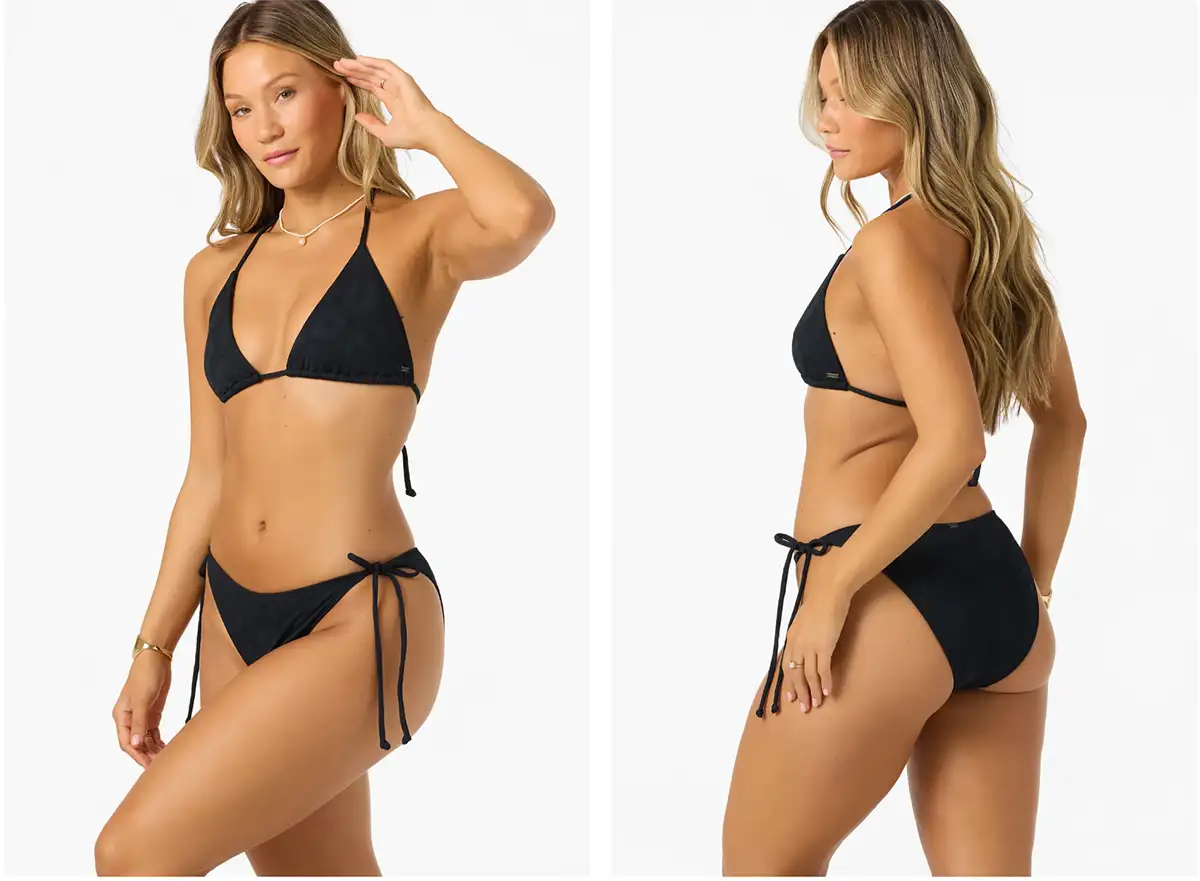
Let’s compare:
North American Swimwear Style
Brazilian Swimwear Style
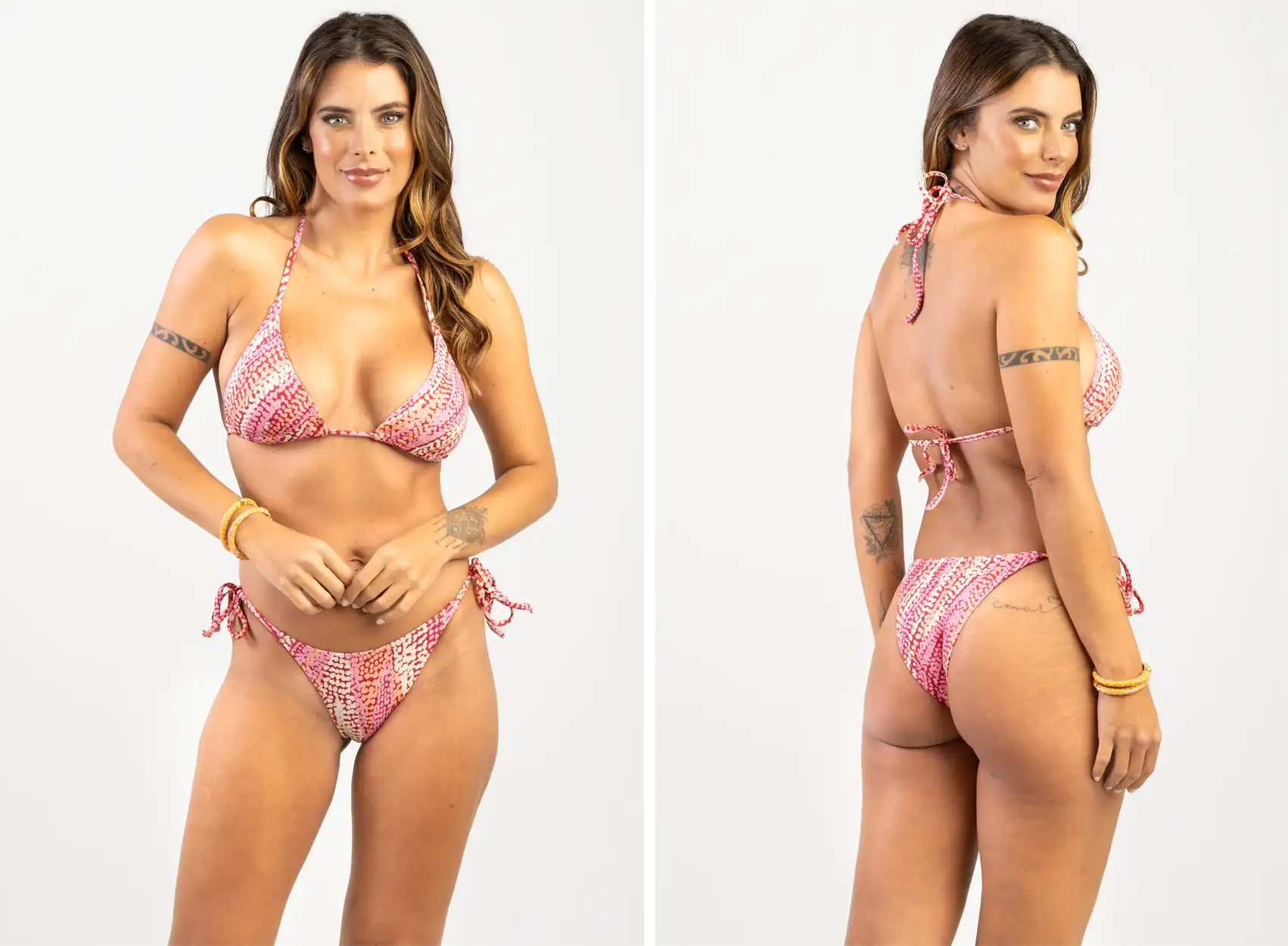
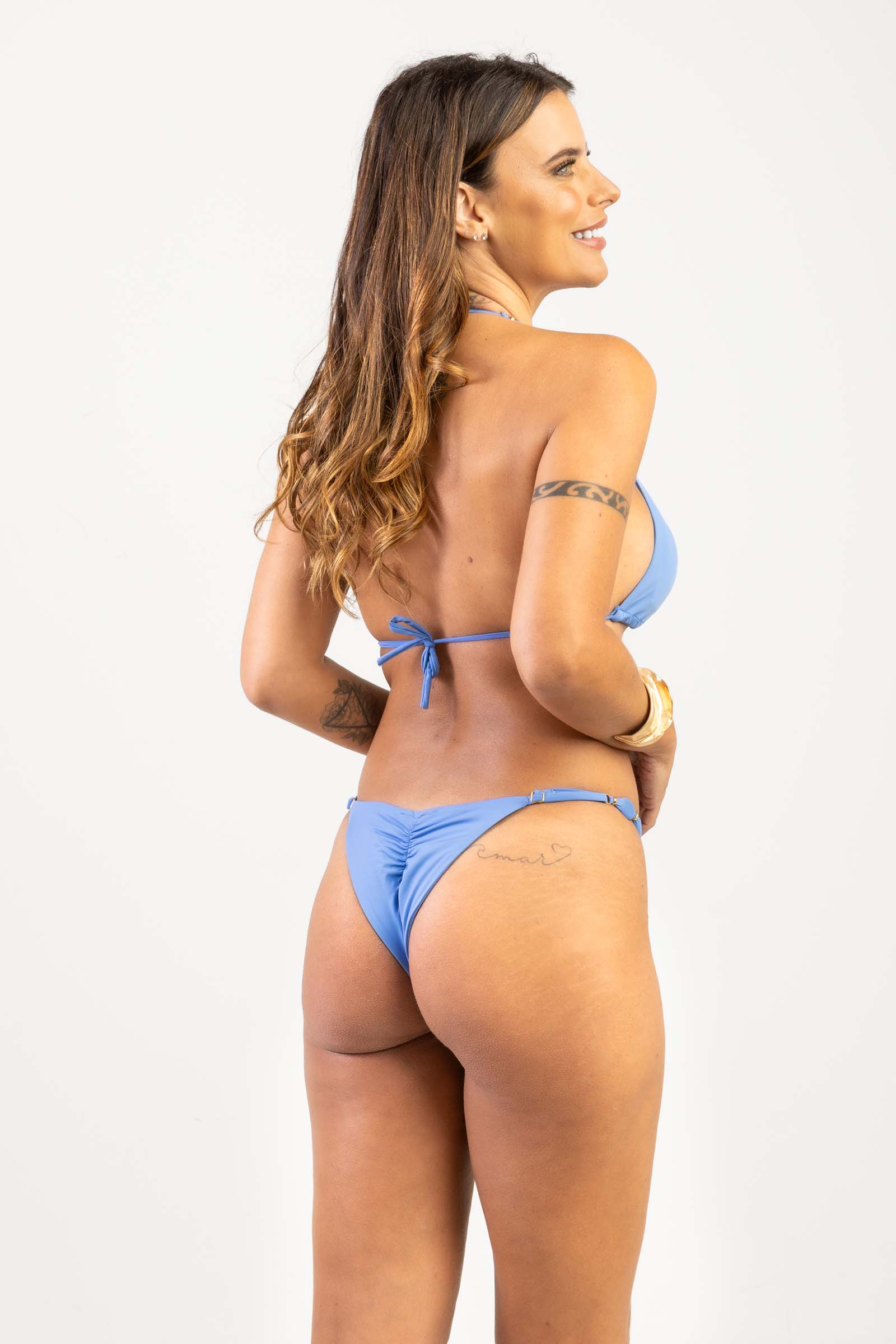
One of the defining characteristics of Brazilian swimwear is the “cheeky” or semi-minimal coverage design.
Rather than fully covering the body, Brazilian bikini bottoms are engineered to create a sculpted silhouette through carefully calibrated proportions, seam placement, and fabric tension.
Several technical elements contribute to the distinctive fit associated with Brazilian bikinis:
- Higher-cut leg openings that visually elongate the legs
- Reduced back coverage for a more contoured appearance
- Elastic tension calibrated for secure yet comfortable compression
- Double-lined construction for improved support and durability
- High-stretch fabrics with strong shape recovery
- Curved seam placement designed to enhance body contouring
| Feature | Standard Swimwear | Brazilian Swimwear |
|---|---|---|
| Coverage | Moderate/full | Reduced/contoured |
| Fabric | Polyester-heavy | Polyamide/elastane |
| Fit | Functional | Body-contouring |
| Styling | Conservative | Fashion-forward |
| Production | Mass-market | Boutique/premium |
Why Brazilian Swimwear Fabrics Perform Differently
One of the biggest differences between a top-tier Brazilian swimwear brand and a mass-market bikini is the fabric engineering behind the final product.
While many standard swimwear manufacturers prioritize low production costs and high-volume output, Brazilian swimwear production is often centered on fabric performance, body contouring, comfort, and long-term durability.
The quality of a bikini is heavily influenced by how the fabric behaves during wear, especially after repeated exposure to saltwater, chlorine, sunlight, heat, and stretching.
One common issue with low-quality swimwear fabrics is loss of compression after repeated exposure to sunscreen oils and pool chemicals.
Polyamide vs Polyester in Premium Swimwear
Most Brazilian bikinis are produced using polyamide and elastane blends rather than lower-cost polyester-based fabrics commonly found in mass-market swimwear.
Polyamide fabrics are widely preferred in luxury swimwear manufacturing because they offer:
- a softer and smoother hand feel,
- higher elasticity and body contouring,
- improved comfort against the skin, better shape recovery after stretching,
- enhanced color vibrancy and print definition
At Mar Egeu, many of our collections are developed using high-quality Brazilian sustainable fabrics, such as:
- 87% polyamide / 13% elastane biodegradable and sustainable fabric using Amni Soul Eco®
- 85% polyamide / 15% elastane LYCRA® XTRA LIFE™ fabrics for enhanced durability and chlorine resistance
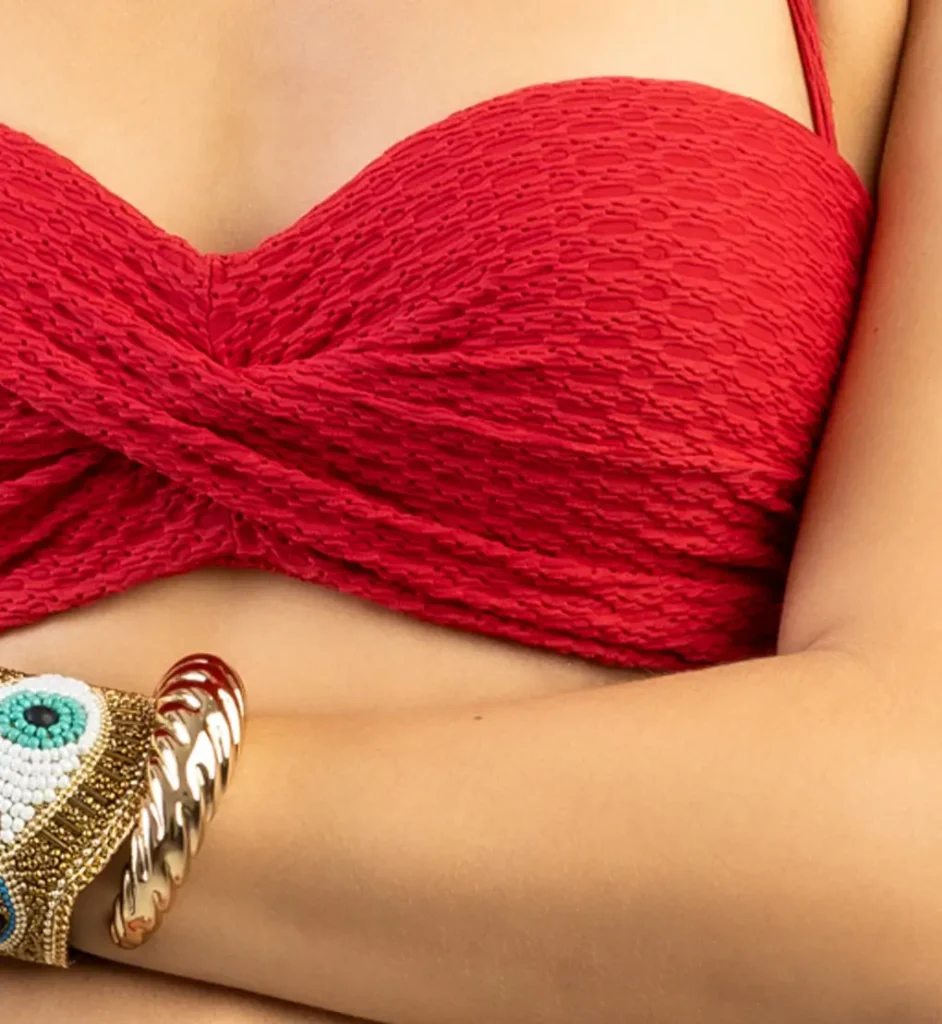
- Textured fabrics developed by SPA Têxtil
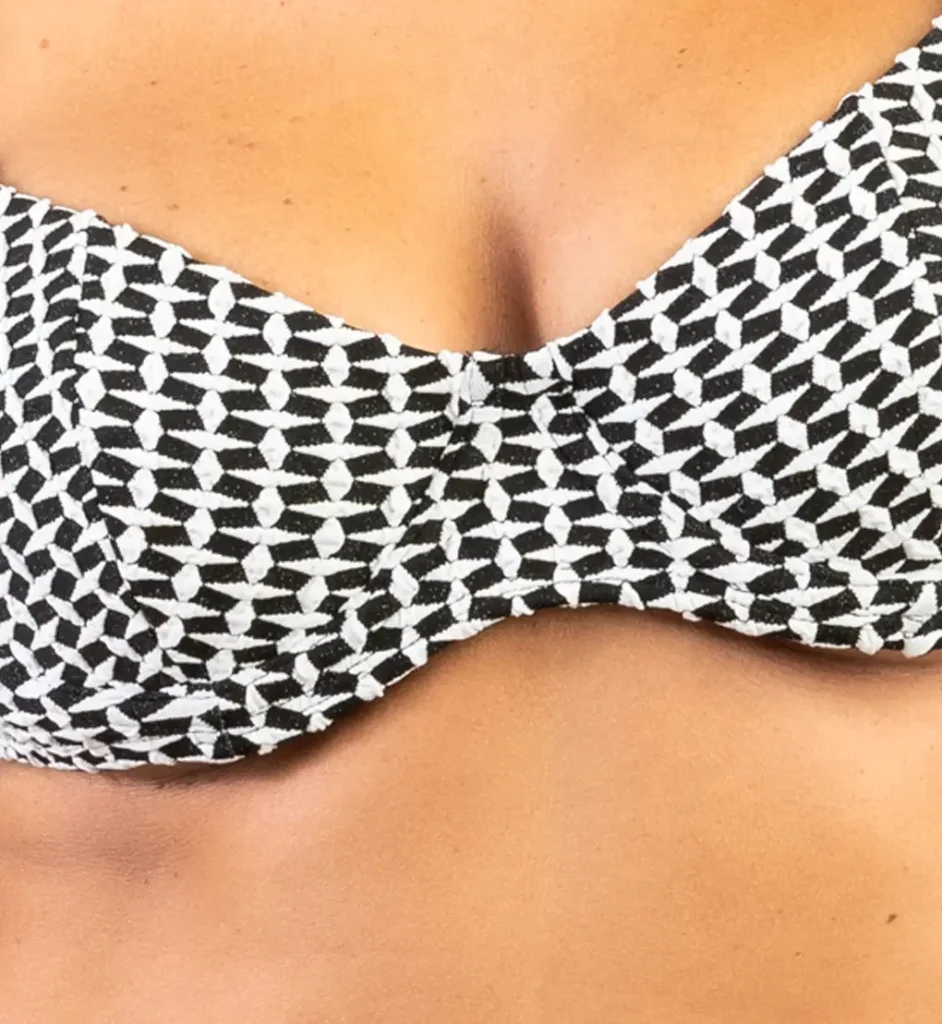
- Jacquard swimwear fabrics produced by Savyon Têxtil
These fabrics are engineered specifically for high-quality swimwear applications where fit consistency, elasticity, and comfort are essential.
Compression, Elasticity & Shape Retention
One of the defining characteristics of Brazilian swimwear is its body-contouring fit. This silhouette is not created only through pattern design, but also through fabric behavior and elastic recovery.
High-quality swimwear fabrics with balanced elastane composition help create:
- Soft compression without excessive tightness
- Improved body contouring
- Better support and fit stability
- Long-term elasticity retention
- Reduced fabric deformation after repeated wear
A stunning swimwear fabric is designed to maintain its original shape even after continuous exposure to chlorine, saltwater, UV radiation, and heat — factors that commonly degrade lower-quality swimwear materials over time.
This recovery performance is especially important for Brazilian bikini cuts, which often use smaller coverage patterns and rely heavily on precise fit engineering.

Double-Lined Construction & Finishing
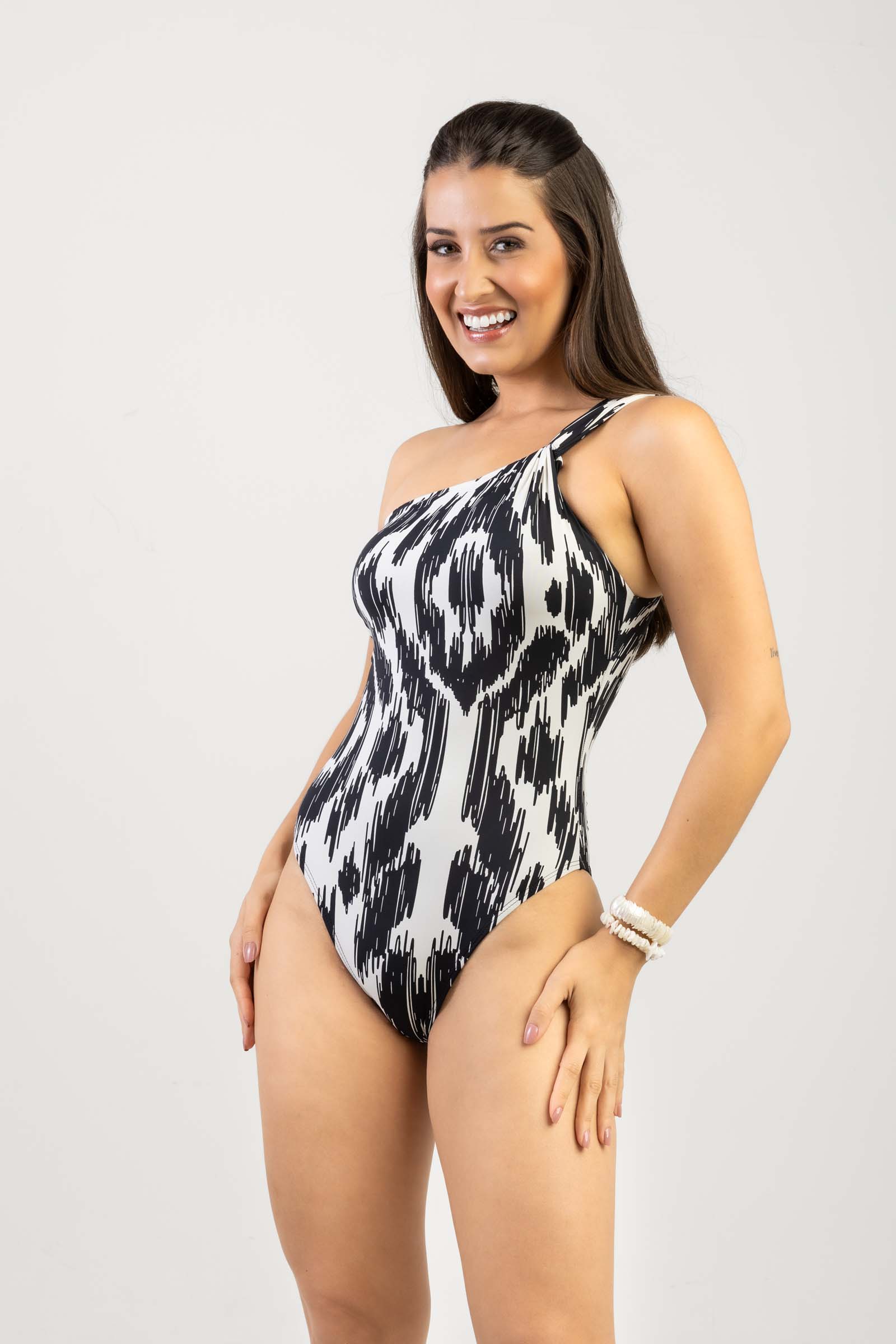
Another difference commonly found in Brazilian swimwear manufacturing is the use of double-lined construction techniques designed to improve comfort, durability, and garment structure.
Double lining helps provide:
- improved opacity when wet
- enhanced fit support
- cleaner garment finishing
- increased durability during repeated use
- more secure compression and contouring
Combined with precision stitching and high-stretch fabrics, these construction methods help create the smooth and sculpted fit associated with premium Brazilian bikinis.
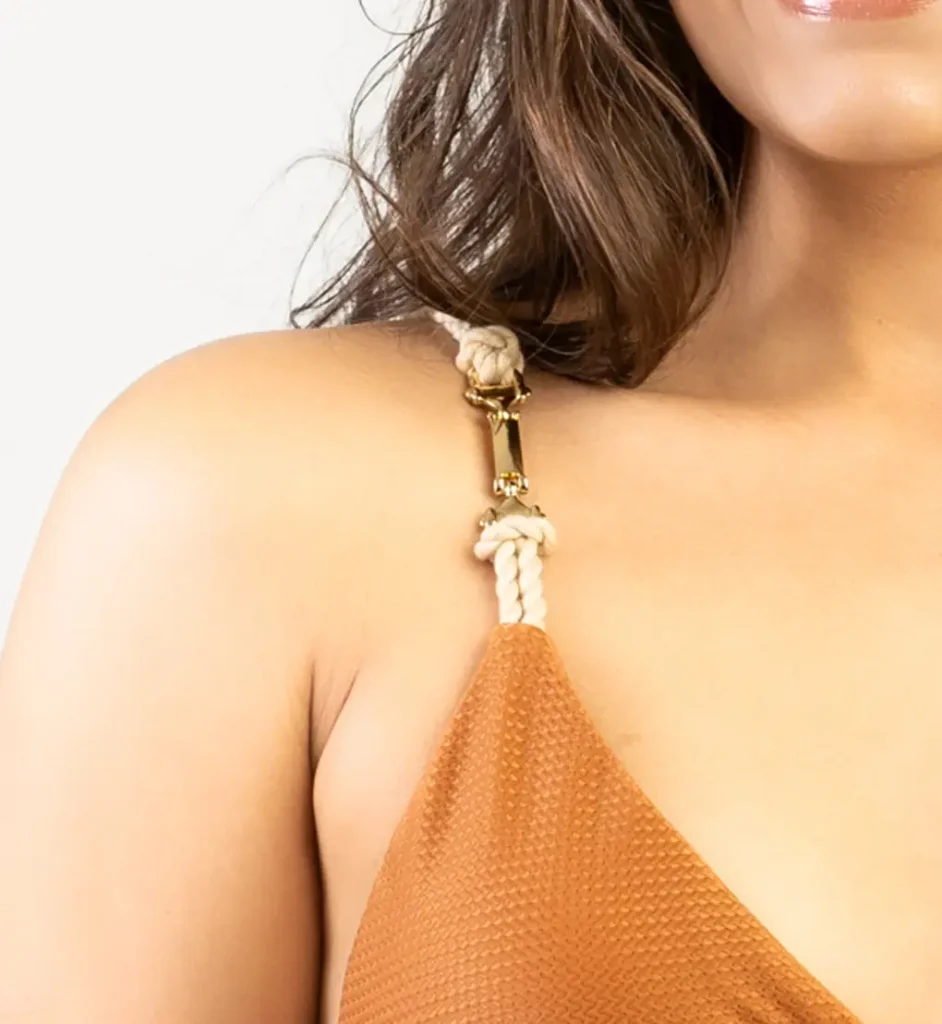
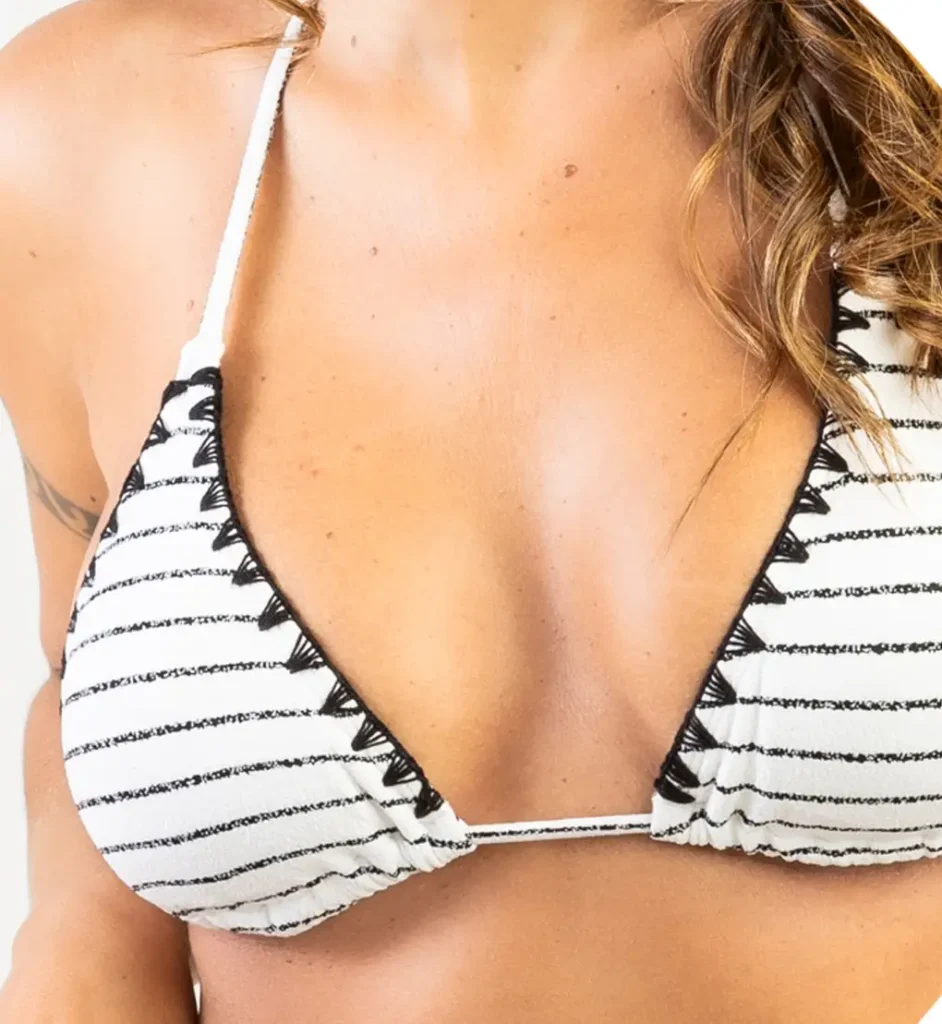
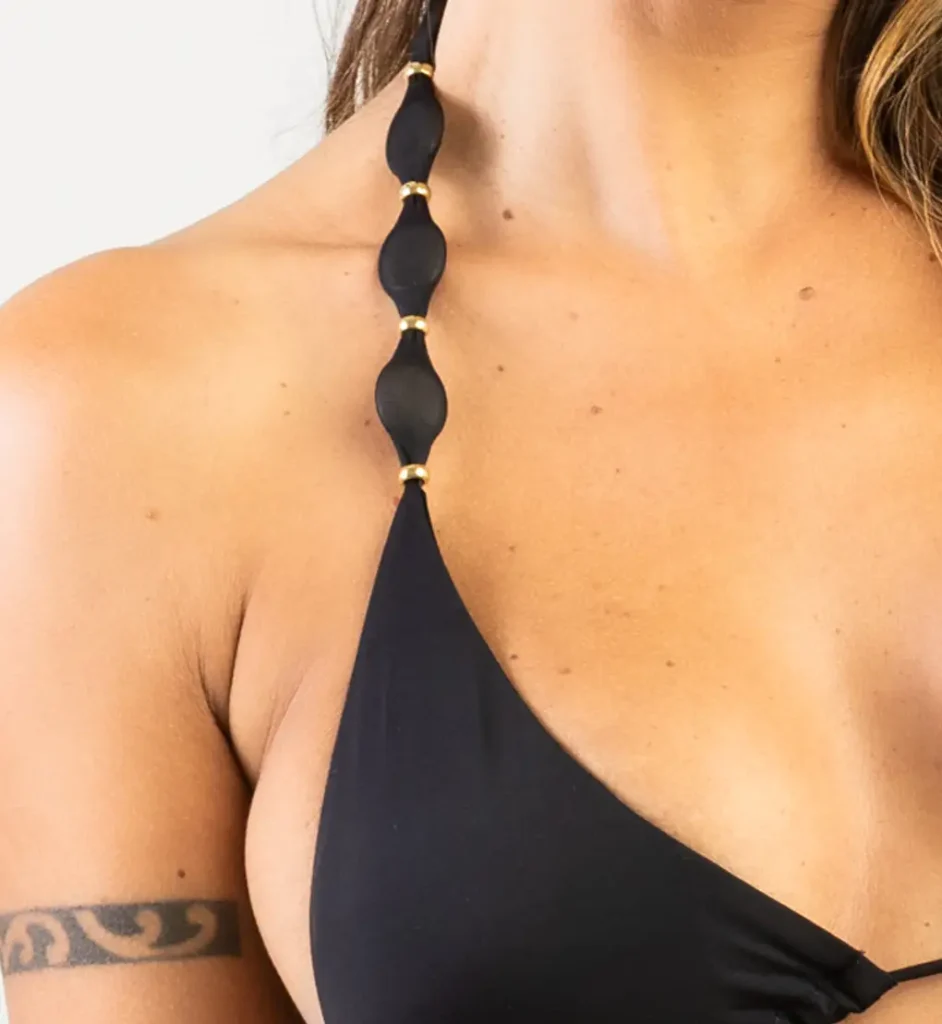
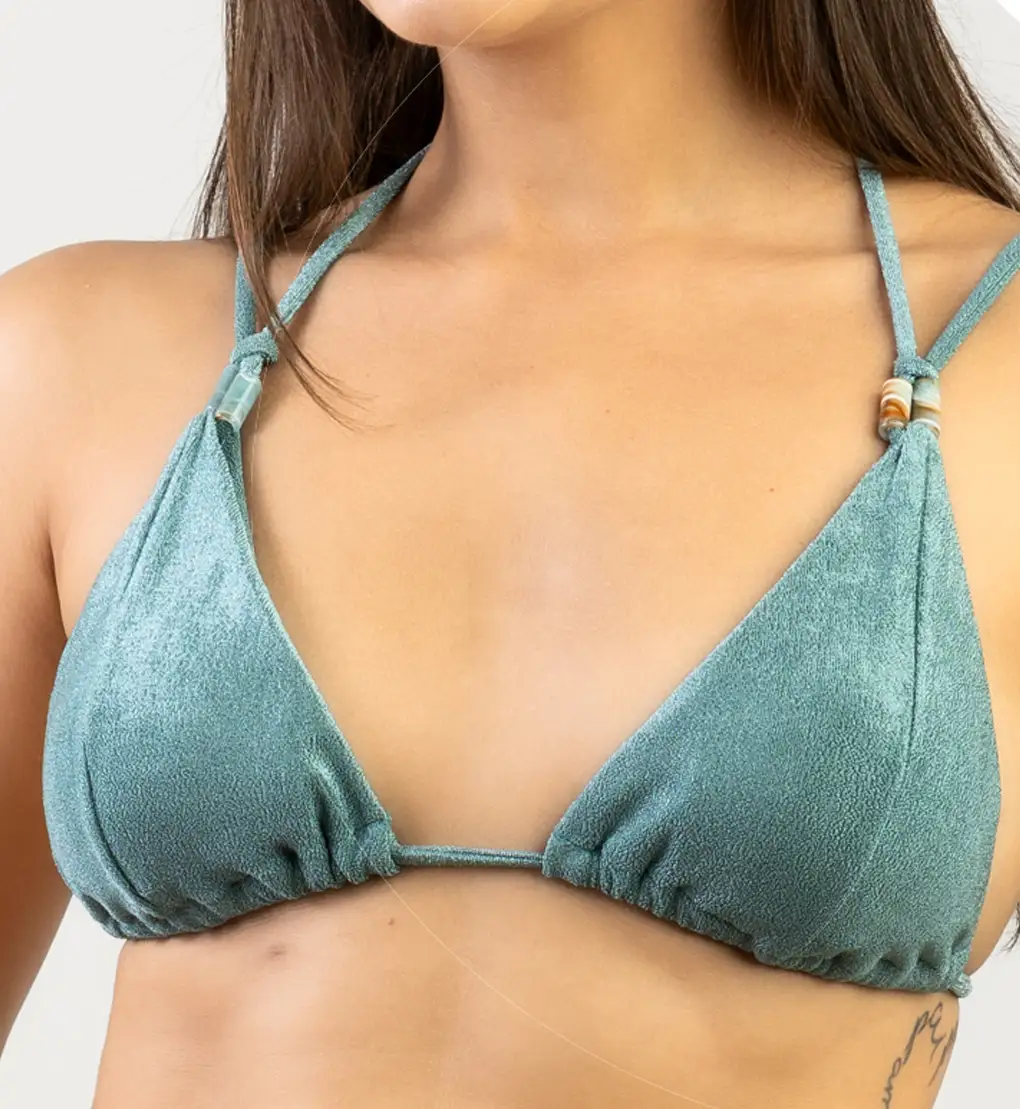
In recent years, textured swimwear fabrics have become increasingly popular in luxury beachwear collections due to their visual depth and aesthetic.
Popular materials include:
- ribbed textures
- jacquard fabrics
- sculpted surface finishes
- matte compression fabrics
- soft-touch luxury polyamides
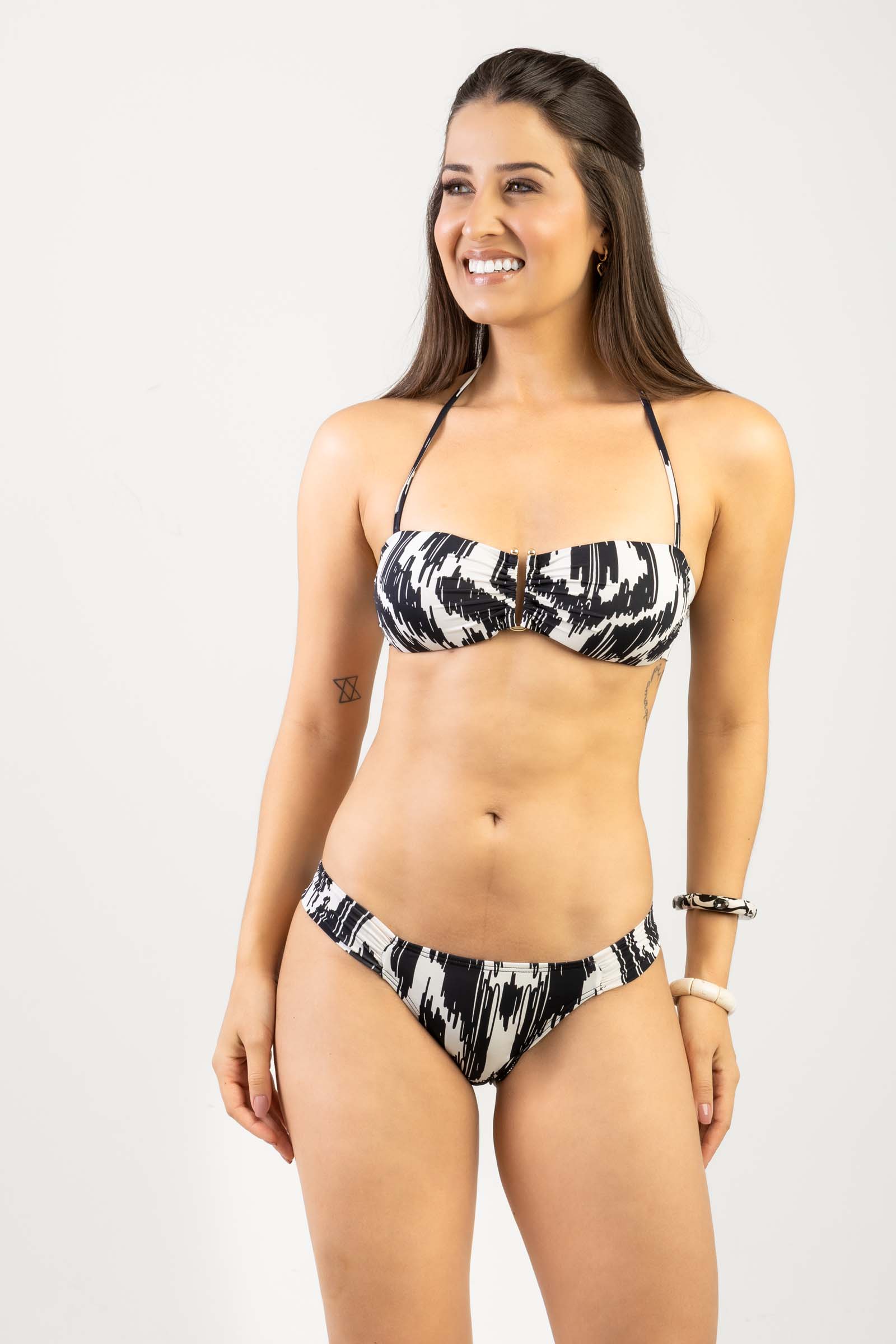
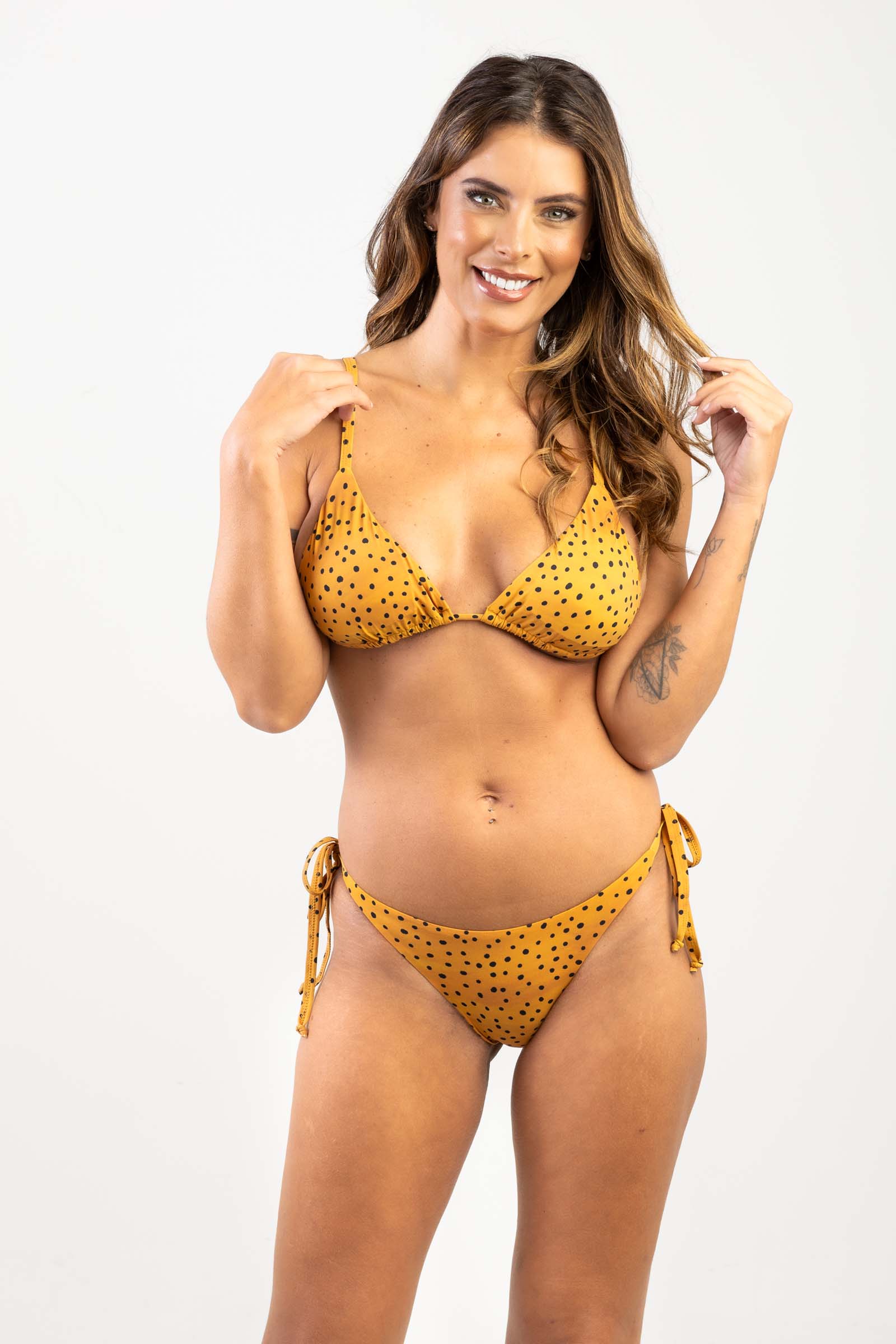
These materials are often combined with exclusive in-house print development, allowing brands to create collections with a stronger visual identity and reduced market saturation.
At Mar Egeu, all prints are developed exclusively for our collections and produced using sustainable fabric bases to align design differentiation with responsible manufacturing practices.


Why This Matters for Swimwear Brands
For private label swimwear brands, fabric quality directly affects customer perception, return rates, garment longevity, and long-term brand positioning in premium markets.
Common Problems With Low-Quality Swimwear Fabrics
The quality of a bikini depends heavily on the performance of its fabric over time.
While low-cost swimwear materials may initially appear visually attractive, many inexpensive fabrics quickly lose elasticity, structure, and comfort after repeated use.
One of the most common problems with low-quality swimwear fabrics is poor shape recovery. Inferior elastane blends often lose compression after exposure to chlorine, saltwater, sunscreen oils, sunlight, and heat. As elasticity weakens, bikinis may become loose, stretched, or unevenly fitted.
| Feature | Low-Quality Swimwear Fabric |
Premium Brazilian Swimwear Fabric |
|---|---|---|
| Elasticity Recovery | Weakens quickly after wear | Maintains compression longer |
| Fabric Feel | Rough or stiff texture | Soft-touch polyamide blends |
| Chlorine Resistance | Low durability | Engineered for pool exposure |
| UV Protection | Usually absent | UV50+ protection available |
| Shape Retention | Fabric stretches out | Improved fit stability |
| Transparency When Wet | Common issue | Double-lined construction |
| Print Durability | Faster fading | Higher color retention |
| Comfort | Limited flexibility | Enhanced body contouring |
Many mass-market swimwear products are manufactured using lower-cost polyester blends that prioritize production cost over long-term garment performance. In contrast, premium Brazilian swimwear manufacturers often use high-elasticity polyamide fabrics engineered specifically for durability, softness, compression balance, and shape retention.
Because swimwear is constantly exposed to moisture, UV radiation, chlorine, and stretching, fabric quality plays a critical role in both garment longevity and overall fit performance.
Why Cheap Swimwear Loses Shape Quickly
One of the most common complaints associated with low-cost swimwear is loss of shape after repeated use. Low-quality elastane fibers, inadequate fabric recovery, and poor construction techniques typically cause this issue.
Swimwear fabrics operate under constant tension during wear. Exposure to saltwater, chlorine, body oils, sunscreen, heat, and repeated stretching places continuous stress on the fabric structure. When lower-grade materials are used, elasticity deteriorates rapidly.
| Cause | Effect on Swimwear |
|---|---|
| Low elastane quality | Reduced elasticity recovery |
| Poor stitching tension | Distorted seams |
| Thin fabric structure | Sagging after wear |
| Weak lining support | Reduced compression |
| Low chlorine resistance | Faster material degradation |
| Inadequate pattern engineering | Unstable fit |
This problem becomes even more noticeable in Brazilian bikini cuts, which often rely on smaller coverage proportions and precise tension balance to maintain their contour-focused fit.
High-quality swimwear fabrics with balanced polyamide and elastane compositions are engineered to maintain elasticity recovery even after prolonged use.
Premium materials such as LYCRA® XTRA LIFE™ and Amni Soul Eco fabrics are specifically developed to improve resistance against chlorine degradation, heat exposure, and fabric deformation.
In addition to fabric quality, construction methods such as double lining, reinforced stitching, and proper elastic application also play an important role in preserving the long-term structure of the garment.
Common Mistakes New Swimwear Brands Make
Launching a swimwear brand involves much more than selecting attractive bikini designs.
Many emerging brands underestimate the technical complexity of swimwear manufacturing, which can lead to fit problems, production delays, and inconsistent product quality.
One of the most common mistakes is prioritizing low production cost over fabric performance.
Choosing inexpensive materials may initially reduce manufacturing expenses, but poor-quality fabrics often result in reduced durability, weak elasticity recovery, fading prints, and customer dissatisfaction.
| Common Mistake | Potential Result |
|---|---|
| Choosing low-cost fabrics | Reduced product durability |
| Skipping fit testing | Inconsistent sizing |
| Overcomplicated first collections | Higher production costs |
| Ignoring elasticity behavior | Poor garment recovery |
| Weak quality control | Increased product returns |
| Using low-grade hardware | Corrosion and discoloration |
| Poor MOQ planning | Excess inventory risk |
Another frequent issue is developing bikini cuts without considering how fabric tension affects the final silhouette.
Smaller coverage swimwear styles require highly precise pattern engineering and elasticity calibration to maintain comfort and fit stability.
Many successful private-label swimwear brands begin with smaller capsule collections focused on fit consistency, fabric quality, and a strong visual identity before expanding into larger seasonal product lines.
Why Many Global Brands Choose Brazilian Swimwear Manufacturing
Brazilian swimwear has become internationally recognized not only for its distinctive aesthetic but also for the technical expertise, fabric innovation, and fit engineering behind each collection. From contour-focused bikini cuts to high-performance polyamide fabrics and premium finishing techniques, Brazilian manufacturing combines fashion-driven design with specialized garment development tailored specifically for the beachwear industry.
For private label brands, producing in Brazil offers advantages that extend beyond manufacturing alone. Access to advanced textile technologies, flexible MOQ structures, exclusive print development, and experienced craftsmanship allows brands to create collections with stronger differentiation in increasingly competitive international markets.
As consumer expectations continue to evolve, factors such as fit consistency, fabric durability, sustainable materials, and long-term garment performance have become essential elements of successful resortwear collections. Because swimwear relies heavily on elasticity recovery, fabric behavior, and precise pattern grading, specialized manufacturing expertise plays a critical role in maintaining both fit stability and product quality over time.
At Mar Egeu, our production process combines more than five decades of industry experience with premium Brazilian fabrics, technical fit development, sustainable production practices, and international export capabilities. From prototype creation to final delivery, our goal is to help brands develop collections that balance aesthetics, comfort, durability, and commercial performance.
Whether launching a boutique bikini label, developing a sustainable resortwear collection, or expanding an established private label brand, working with an experienced Brazilian bikini manufacturer can provide the technical foundation, flexibility, and product differentiation needed to create long-term value in the global beachwear market.
Wholesale
Please fill out the form below, indicating your interest in Private or White Label, and we will send you detailed information about our processes shortly. Thank you!