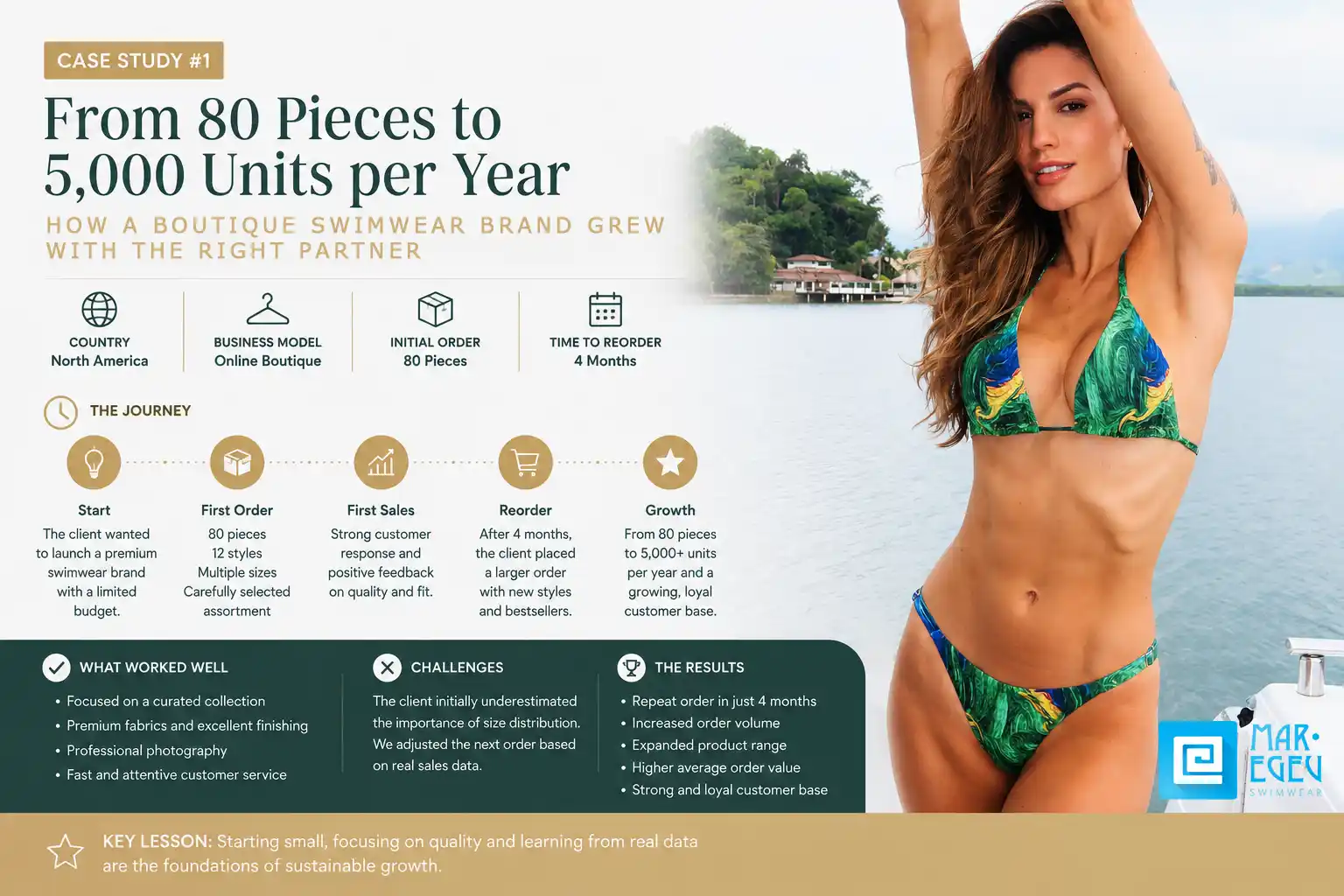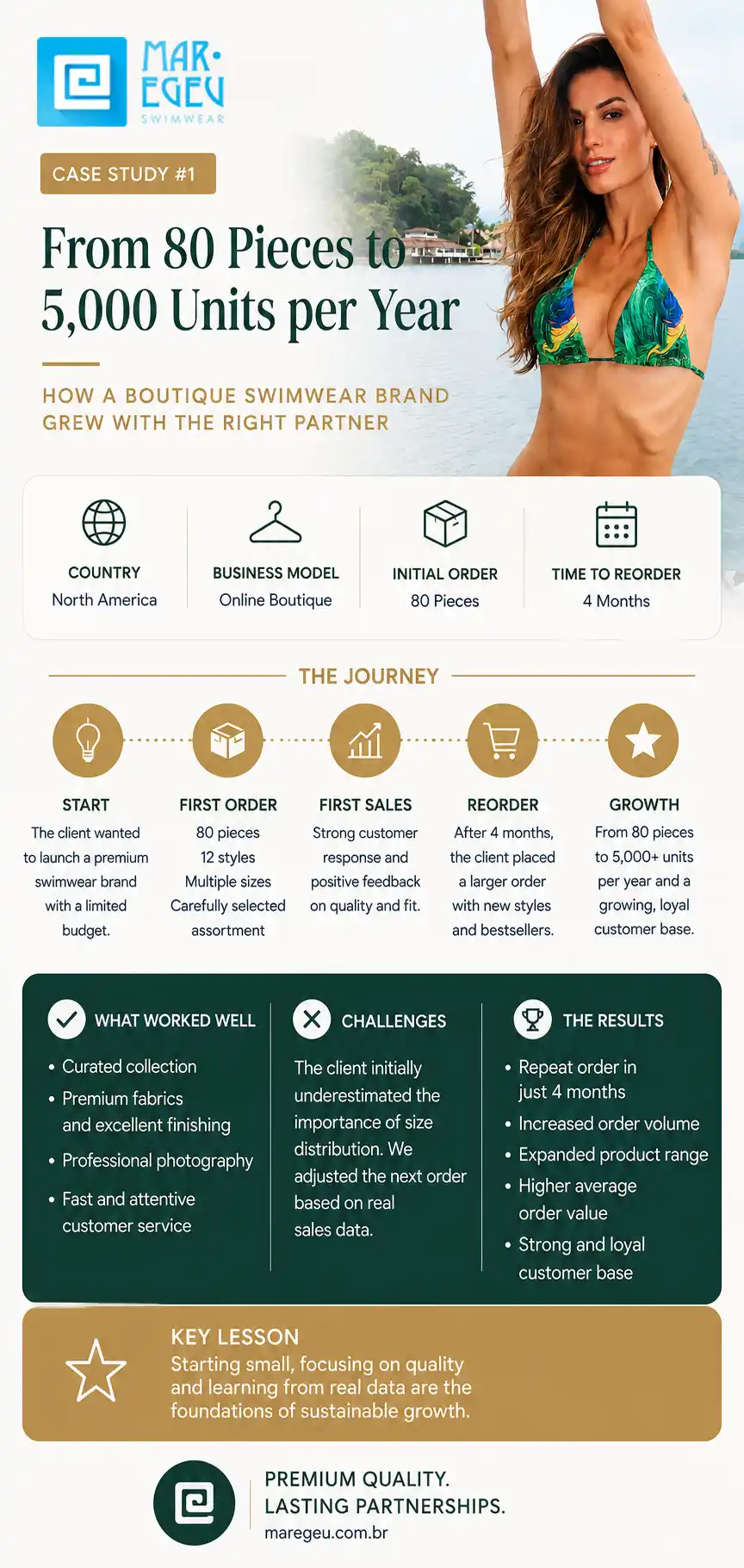



Cheap vs Premium Swimwear Manufacturers
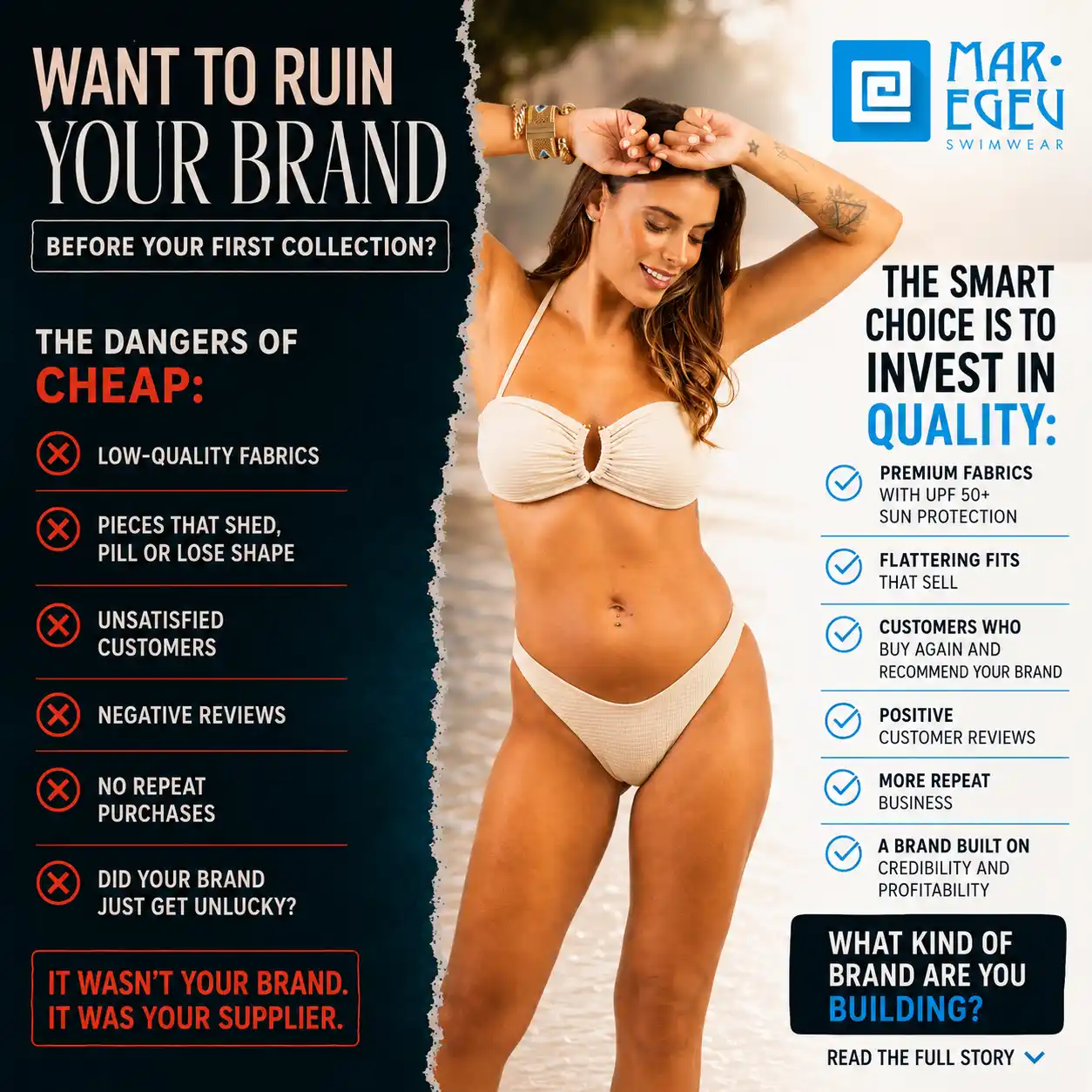
The cheapest decision you make today could become the most expensive mistake your brand ever makes.
Every detail feels like an opportunity to create something customers will love, from selecting colors and silhouettes to designing labels and planning your marketing campaign.
Yet many brands underestimate the single decision that has the greatest impact on their future: choosing the right swimwear manufacturing partner.
For emerging labels, boutique retailers, luxury resorts and even established fashion brands, price often becomes the deciding factor when comparing manufacturers. At first glance, the logic seems reasonable. Lower production costs appear to increase profit margins, reduce financial risk and allow for more competitive pricing.
Unfortunately, reality tells a very different story.
A bikini that loses its elasticity after a few wears, becomes transparent when wet, fades under sunlight or arrives with inconsistent stitching doesn't simply disappoint a customer.
It damages trust.
And trust is the most valuable asset any brand owns.





Today's consumers are more informed, more demanding and more vocal than ever before. A single disappointing purchase can quickly become a one-star review, a viral social media post or a recommendation to avoid your brand altogether.
Unlike advertising, reputation cannot simply be purchased back.
According to multiple consumer behavior studies, most shoppers read online reviews before making a purchase, and many consider brand reputation over product price. In the fashion industry, where quality is experienced directly on the skin, those expectations become even higher.
This is why successful swimwear brands rarely compete by offering the lowest prices.
They compete by delivering confidence.
✅ Confidence that every swimsuit will fit beautifully.
✅ Confidence that colors will remain vibrant.
✅ Confidence that premium fabrics will perform season after season.
✅ Confidence that every customer becomes a returning customer.
✅ Marketing campaigns that perform because trust has already been established.
The irony is that manufacturers who promise the lowest production cost often create the highest long-term expense.
❌ Returns and Refunds.
❌ Negative reviews.
❌ Lost customers.
❌ Damaged brand perception.
❌ Lower customer lifetime value.
❌ Marketing campaigns that fail to convert because trust has already been broken.
These costs rarely appear on the initial quotation, but they eventually appear on your balance sheet.
This article explores the real difference between cheap and premium swimwear manufacturing.
Beyond comparing fabrics or stitching techniques, we'll examine how manufacturing quality directly influences customer satisfaction, online reputation, pricing power and sustainable business growth.
Whether you're launching your first private label swimwear collection or expanding an established fashion brand, understanding these differences can save far more than money: it can protect the reputation you've worked so hard to build.
1. Why Cheap Swimwear Often Becomes the Most Expensive Option
Every business owner understands the importance of managing costs. Reducing expenses is a natural part of building a profitable company.
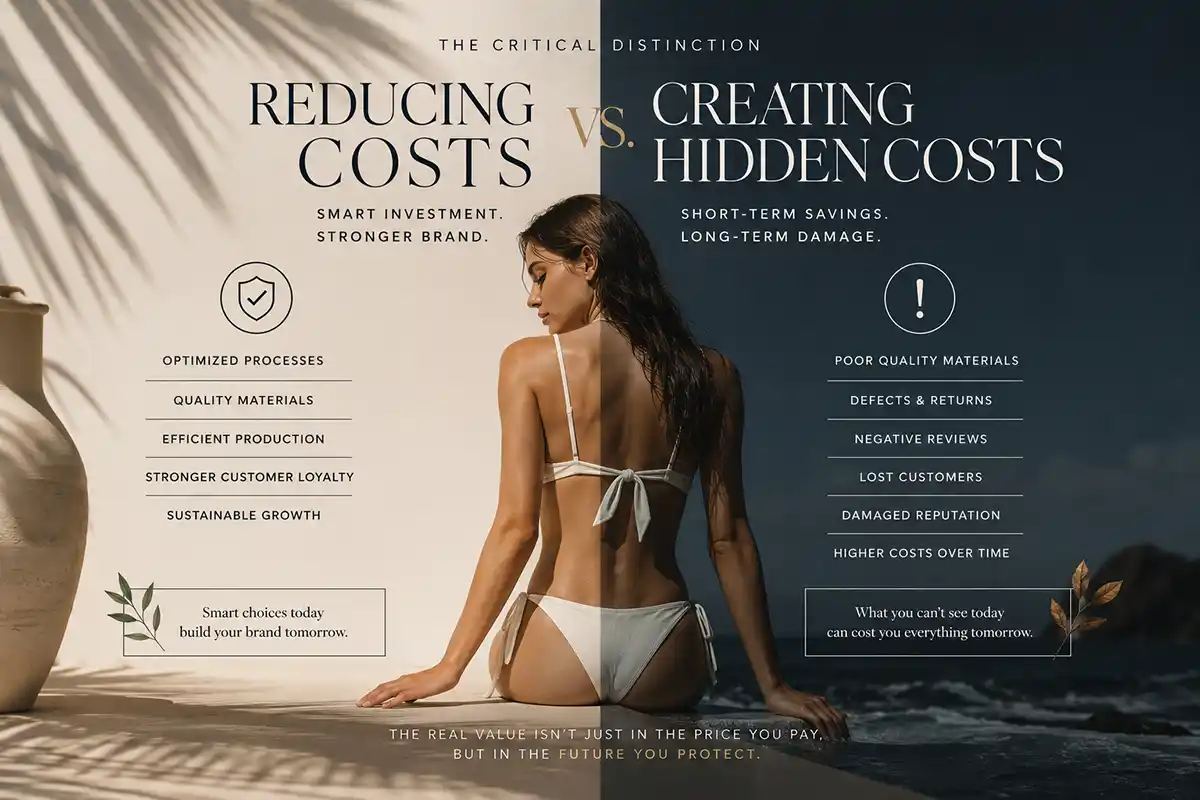
But there is a critical distinction between reducing costs and creating hidden costs.
When selecting a swimwear manufacturer, whether for a Private Label or White Label collection, many brands focus almost exclusively on the production quote. At first glance, the lower the cost per piece, the more attractive the opportunity seems.
When choosing a swimwear manufacturer, many brands focus almost exclusively on the production quote. The lower the price per piece, the better the opportunity appears.
However, the manufacturing cost represents only a fraction of the total cost of selling a product.
❌ The real question isn't:
"How much does this bikini cost to produce?"
✅ The real question is:
"How much could poor quality cost my brand over the next five years?"
1.1 The Hidden Cost Formula
Low manufacturing costs can quietly generate expenses throughout every stage of your business.
A lower-quality garment may increase:
- Product returns
- Refunds
- Replacement shipments
- Negative online reviews and social media complaints
- Lower referral rates
- Reduced customer lifetime value
- Higher customer acquisition costs
These expenses rarely appear in the manufacturer's quotation. But they almost always appear later.
🚨 The most successful fashion businesses evaluate manufacturing partners based on total value, not simply unit price.
1.2 Customers Don't Know Your Manufacturer
This is perhaps the most important reality every fashion entrepreneur should understand:
Your customers never meet your factory or your suppliers.
They never evaluate your production process.
When something goes wrong, they don't blame the manufacturer. They blame your brand!
If the stitching comes apart after two wears or the fabric becomes transparent when wet, or the color fades after a few weeks in the sun or the fit changes after washing.
❌ Your customer doesn't think:"The factory made a mistake."
✅ They think: "I bought from the wrong brand."
That distinction changes everything.
1.3 Every Product Tells a Story
Premium swimwear communicates confidence before a customer says a single word.
- The fabric feels substantial.
- The stitching appears precise.
- The lining sits correctly.
- The garment maintains its shape.
- The colors remain rich.
- The elasticity performs exactly as expected.
These details are often invisible during production, but impossible to ignore after purchase.
Likewise, lower-quality products tell a different story.
Customers may not know the technical reasons behind these issues, but they immediately recognize how the product makes them feel.
And feelings are what people remember.
1.4 Reputation Is Built One Customer at a Time
In today's digital marketplace, every customer becomes a potential publisher.
✅ One satisfied buyer may recommend your brand to friends, post photos on Instagram, leave a five-star review or become a loyal customer for years.
❌ One disappointed buyer can do exactly the opposite.
Consumers no longer experience brands only through advertising.
They experience them through:
Google Reviews, Social media comments, TikTok videos, Product review platforms, Word-of-mouth recommendations.
🚨 A single negative experience can reach thousands of potential customers within hours.
Unlike manufacturing defects, reputational damage cannot be repaired with a replacement product.



High Quality Swimwear: Lycra Xtra Life, UPF 50+, Oeko Tex
2. Premium Swimwear vs. Low-Quality Swimwear
Fabric Is the Foundation of Every Premium Swimsuit
Every exceptional swimsuit begins long before it reaches the sewing room. It begins with the fabric.
Premium manufacturers carefully select textiles designed specifically for swimwear performance.
These fabrics are engineered to withstand repeated exposure to: Saltwater, Chlorine, Sunscreen Body oils, UV radiation, Frequent stretching, Regular washing.
Inferior fabrics often perform well during photography sessions and showroom presentations. However, after repeated use they may begin to lose elasticity, fade unevenly or become transparent when wet.
The customer rarely blames the fabric. They blame the brand.

Premium Swimwear: Sustainable, Oeko Tex and UPF50+
2.1 The Differences Your Customers Can Feel
At first glance, two swimsuits can appear almost identical.
The colors look similar. The silhouettes follow the same trends. The packaging may even create the impression of comparable quality.
Yet the true difference between premium and low-quality swimwear isn't always visible on the hanger.
It's revealed after the first swim. After the first vacation. After the first season.
Customers may not understand textile engineering or garment construction, but they immediately recognize how a product performs.
Comfort, durability, fit and confidence are experiences—not specifications. For brands, these experiences define reputation.
2.2 Why Certified Fabrics Matter
Not all swimwear fabrics are created equally.
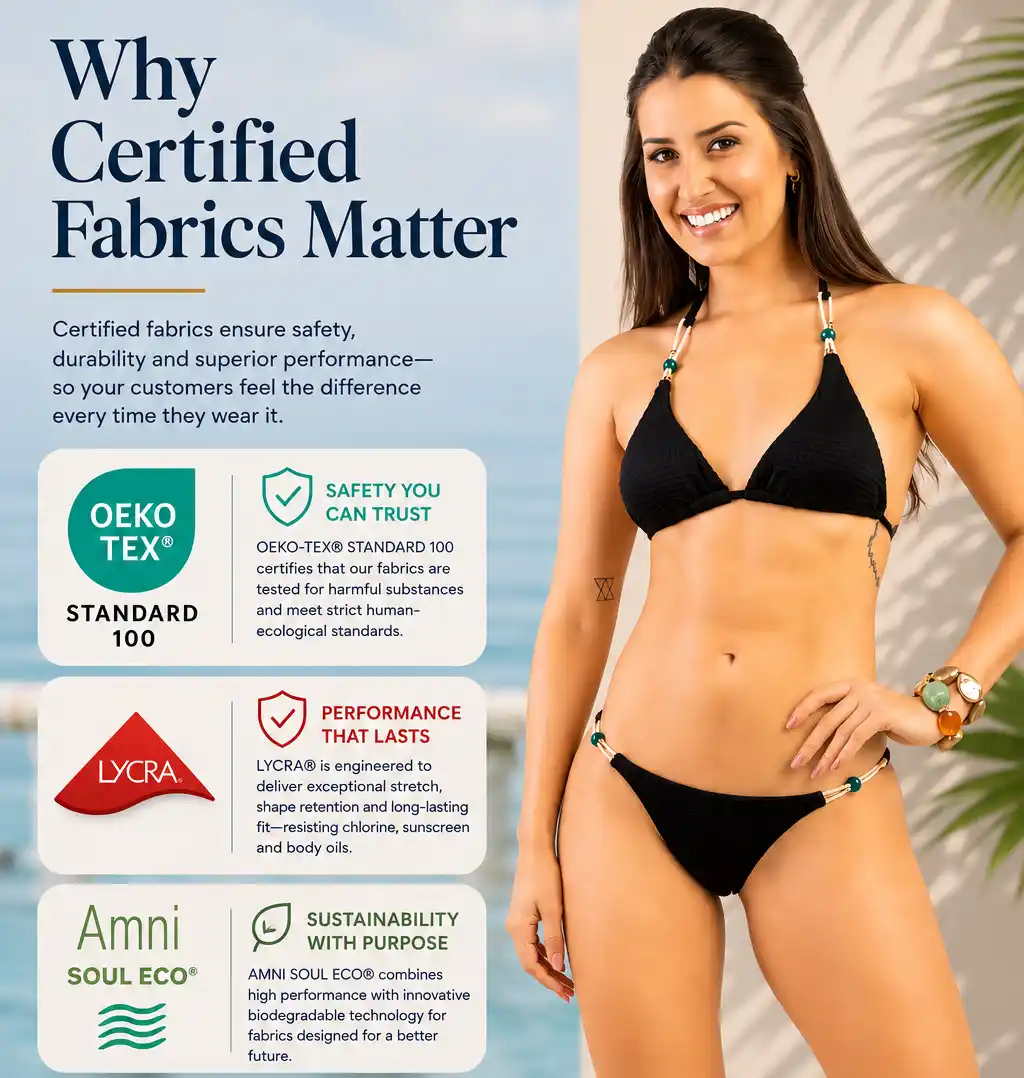
Reputable manufacturers work with internationally recognized textile suppliers whose materials undergo rigorous testing for safety, durability and performance.
Certifications such as OEKO-TEX® STANDARD 100 help ensure that fabrics have been tested for harmful substances and meet strict human-ecological standards.
For consumers, this provides peace of mind.
For brands, it reinforces credibility.
Likewise, premium fibers such as LYCRA® XTRA LIFE™ are specifically engineered to provide significantly greater resistance to chlorine, sunscreen and body oils than conventional elastane.
The result is a swimsuit that maintains its fit, recovery and appearance for much longer.
Customers may never recognize the certification logo.
But they will notice how the garment performs.

2.3 Sustainability Is Also a Quality Standard
Today's consumers increasingly expect brands to consider environmental responsibility alongside product performance.
Materials such as AMNI Soul Eco® combine technical performance with innovative biodegradable technology designed for accelerated decomposition in landfill conditions once properly discarded.
For brands, sustainability is no longer simply a marketing message.
It has become another indicator of quality.
Consumers increasingly associate responsible manufacturing with trustworthy brands.
What is Oeko-Tex Standard 100?
OEKO-TEX® STANDARD 100 is one of the world's most recognized textile safety certifications.
Rather than evaluating the manufacturing company itself, this certification tests the fabric and other textile components to ensure they are free from harmful substances that could pose risks to human health.
Every certified material undergoes laboratory testing for hundreds of regulated and non-regulated chemicals, including substances that may cause skin irritation or other health concerns.
For swimwear brands, using OEKO-TEX® certified fabrics demonstrates a commitment to consumer safety and product quality.
For customers, it provides additional confidence that the swimsuit has been manufactured using materials that meet internationally recognized safety standards.
Why it matters for your brand
- Greater consumer confidence
- Safer textiles for direct skin contact
- Internationally recognized certification
- Stronger premium brand positioning

What is LYCRA® XTRA LIFE™?
Most swimsuits lose elasticity over time.
Repeated exposure to chlorine, sunscreen, body oils, saltwater and frequent stretching gradually weakens ordinary elastane fibers, causing garments to lose their original shape.
LYCRA® XTRA LIFE™ fiber was specifically developed to address this problem.
Compared with conventional elastane, it provides significantly greater resistance to the conditions swimwear experiences every day, helping garments maintain their fit, recovery and appearance for much longer.
For brands, this means fewer customer complaints, fewer returns and products that continue performing season after season.
Key benefits
- Superior shape retention
- Increased chlorine resistance
- Better resistance to sunscreen and body oils
- Longer garment lifespan
- Improved customer satisfaction

What is AMNI Soul Eco®?
Sustainability has become one of the defining characteristics of premium fashion.
AMNI Soul Eco® is an innovative polyamide fiber designed to offer the same comfort, softness and performance expected from premium swimwear while incorporating enhanced biodegradation technology.
Under landfill conditions and in the presence of microorganisms, the material is engineered to decompose significantly faster than conventional synthetic polyamide fibers.
While durability during normal product use remains uncompromised, the fiber is designed to reduce long-term environmental impact after proper disposal.
For brands seeking to combine performance with environmental responsibility, AMNI Soul Eco® represents an important innovation in textile technology.
Why sustainable fabrics matter
- Reduced long-term environmental impact
- Premium performance and comfort
- Supports responsible brand positioning
- Appeals to environmentally conscious consumers

What is UPF 50+ Protection?
Many people assume all swimwear provides the same level of sun protection.
In reality, ultraviolet (UV) protection depends on several factors, including fabric construction, fiber composition and textile technology.
UPF (Ultraviolet Protection Factor) measures how effectively a fabric blocks harmful ultraviolet radiation.
A fabric rated UPF 50+ blocks more than 98% of UV rays under standardized testing conditions, helping reduce sun exposure while outdoor activities are enjoyed.
Although sunscreen remains essential, UPF-rated swimwear provides an additional layer of protection, particularly during extended periods at the beach or pool.
Benefits of UPF 50+ fabrics
- Enhanced sun protection
- Greater comfort during prolonged outdoor use
- Added value for health-conscious consumers
- Increased perceived product quality
| Technology | Primary Purpose | Main Benefit | Why It Matters |
|---|---|---|---|
| OEKO-TEX® STANDARD 100 | Textile safety | Tested for harmful substances | Builds consumer trust |
| LYCRA® XTRA LIFE™ | Fiber performance | Longer-lasting elasticity | Improves durability and fit |
| UPF 50+ | UV protection | Blocks over 98% of UV rays | Adds protection during outdoor use |
| AMNI Soul Eco® | Sustainable fiber | Enhanced biodegradation technology | Supports responsible fashion |